Senators Reintroduce AICOA — Legislation That Would Break Digital Tools and Hurt Small Businesses
Senators Chuck Grassley (R-IA) and Amy Klobuchar (D-MN) have reintroduced the American Innovation and Choice Online Act (AICOA) — legislation that has failed twice amid bipartisan concerns about its impact on small businesses and with fewer cosponsors than previous versions.
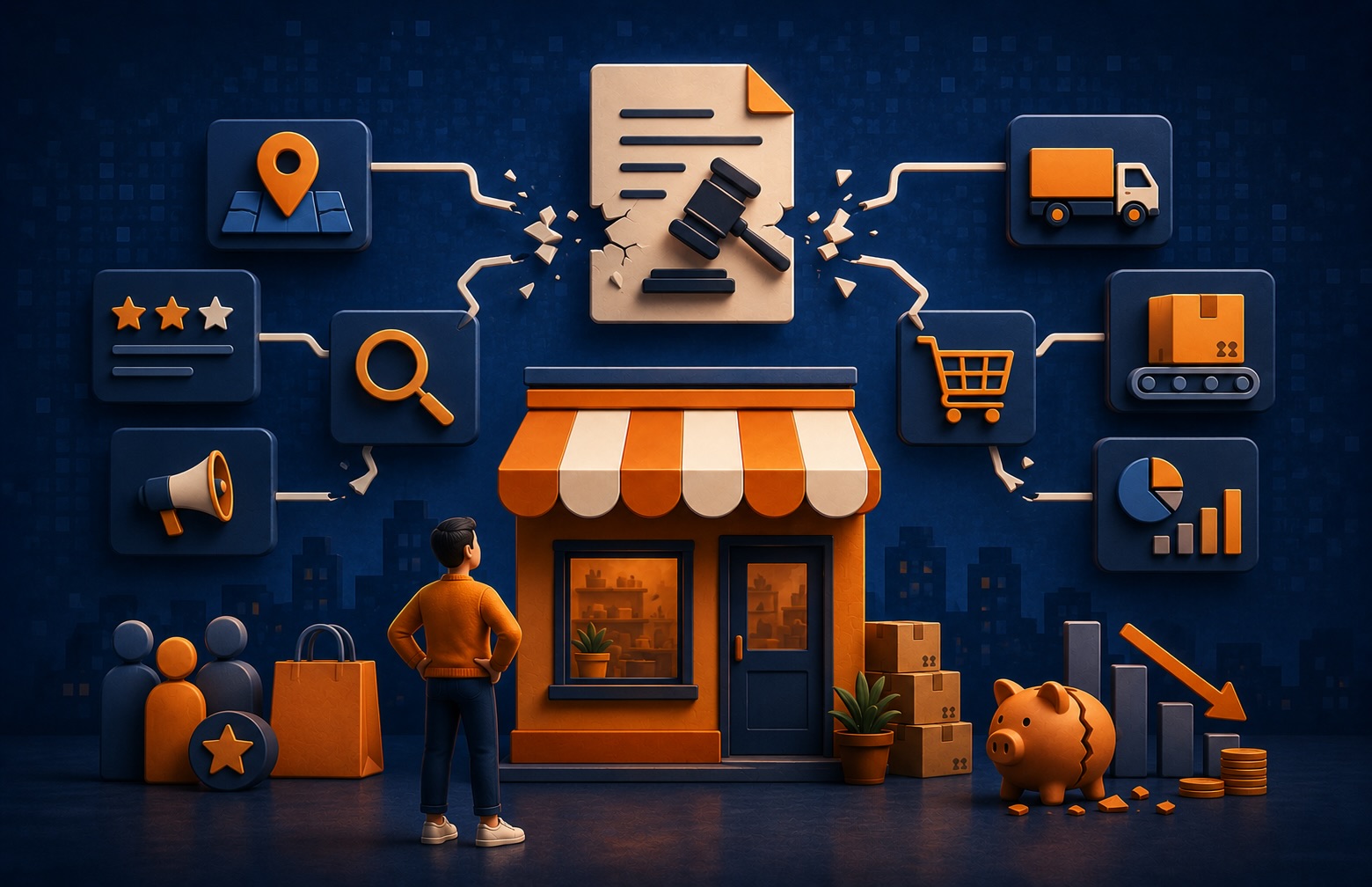
AICOA, and other efforts to rewrite U.S. competition law, threaten to harm small businesses by breaking apart affordable, integrated digital tools that help them compete against giant companies and succeed in today’s digital economy.
The potential damage is staggering. Dartmouth professor emeritus John Scott estimates AICOA could cost U.S. small businesses a whopping $500 billion over 10 years in increased costs and lost revenue.
AICOA’s Threat to Integrated Digital Tools — and Small Businesses
For millions of small businesses, integrated digital tools like HubSpot, Google Workspace, and Fulfillment by Amazon (FBA) are key to reaching customers, growing efficiently, and managing logistics. According to recent 3C research, 63% of small business leaders say platforms that integrate products and services save them time and money.
AICOA would require digital platforms to break apart these integrated tools, because integration gives the platforms’ products and services an advantage over those of competitors. AICOA completely ignores whether or not that integration leads to better services and lower prices for small businesses and consumers.
Here’s what AICOA would do to many of small businesses’ most valuable tools.

Breaking Google Business Profiles
Imagine you search for a local coffee shop. The box that pops up — showing the shop’s location, hours, and customer reviews — is called a Google Business Profile. It’s free for small businesses, and an incredibly valuable marketing tool that seamlessly integrates Google Maps and Google Reviews with Google Search.
Under AICOA, this integration would be banned. Google would be forced to give equal placement to competitors like Yelp or Mapquest, even if the user experience is clunky. A once-simple search becomes a chaotic mess, making it harder for the local coffee shop to stand out. In addition, companies like Yelp typically charge for the same services Google offers for free, such as changing information or moderating reviews. Elevating these companies will force small businesses to pay more for such key services.
Consumers have a far worse online experience, while small businesses pay more for less effective marketing tools.
Unraveling Amazon Prime
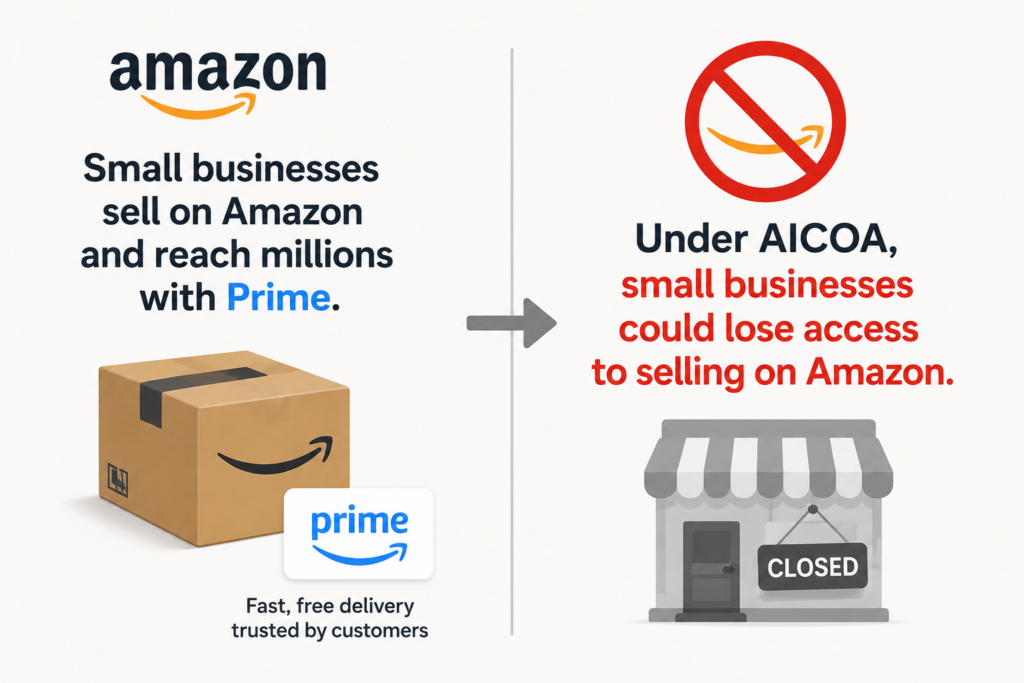
For many Amazon sellers, success is tied to offering fast, free shipping that customers have come to expect through Prime. Fulfillment by Amazon (FBA) — Amazon’s in-house warehousing, shipping, customer returns and analytics tool — makes it easy for sellers to qualify for Prime, and typically costs sellers significantly less than it would to handle fulfillment services themselves. Sellers do not have to use FBA, even to qualify for Prime; as long as they meet Prime’s expectations for shipping speed, they can use any service they like. However, many sellers choose to use FBA because of the convenience and value it provides.
Under AICOA, Amazon would have two choices: 1. Allow other shipping services to integrate with Prime, regardless of their cost, shipping speed, or reliability. This would make the Prime badge less meaningful — undermining consumer trust and hurting countless Prime sellers. 2. Make Prime exclusive to products sold by Amazon directly, and lock out millions of third-party sellers that use Prime to drive sales.
At a time when small businesses are already struggling with economic uncertainty and rising costs, it makes no sense to break tools that help them succeed.
Lessons from Europe

The United States doesn’t need to guess how AICOA’s effects would play out. The European Union passed similar legislation, the Digital Markets Act (DMA), in 2022. Four years later, the DMA’s negative effects are clear: European consumers, entrepreneurs, small businesses, innovation, and economic growth and competitiveness have all suffered in the wake of the law’s passage.
American lawmakers shouldn’t import an EU-style regulatory model that would weaken integrated digital tools that help small businesses reach customers, manage operations, and compete.
The Bottom Line
Small businesses deserve smart, forward-looking policy that makes it easier — not harder — to leverage digital tools to grow.
AICOA would disrupt tech-powered tools and systems that millions of small businesses use every day — and small businesses will once again play a key role in explaining the bill’s flaws and potential harms.
To learn more about AICOA, read our 2021 blog post: U.S. Senate Legislation Will Hurt Small Businesses