“The Big Guys’ Technology Helps Little Guys Like Me Punch Above Our Weight”
3C Talks to Neil Abramson, Co-Founder of Leominster, Massachusetts-based ECi Stores, About Digital Tools’ Role In His Business’s Growth and Success
3C: Tell us about your business. What do you do?
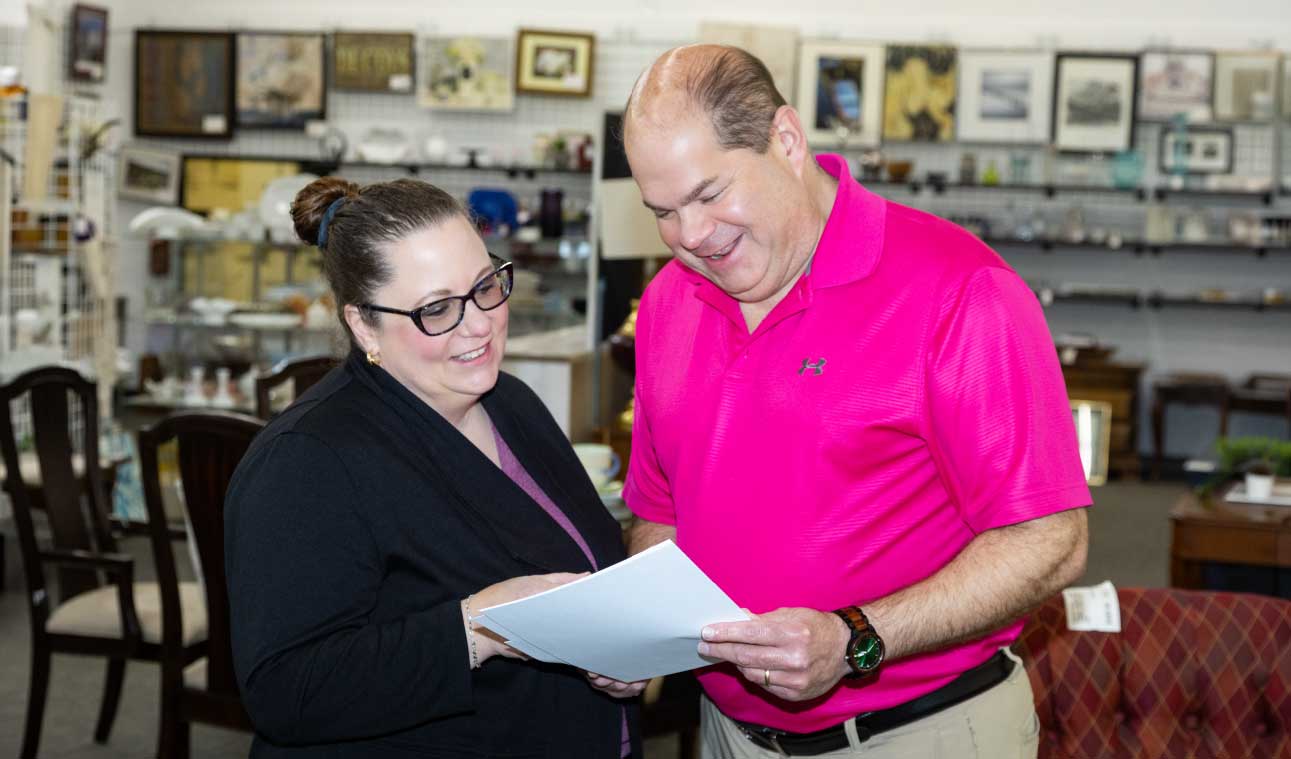
Neil: My wife and I run a small chain of consignment stores in Leominster, Massachusetts. We sell gently used clothes, furniture, and home decor. It’s the ultimate Main Street business — when you walk in, you’re literally seeing inside your neighbors’ closets and living rooms.
3C: That’s an unusual line of work! How did you get started?
Neil: When our kids were little, we bought and consigned their clothes at a shop in a nearby town. One day, the owners called and told us to come get our stuff because the shop was closing. They told us consignment was the worst business ever, and that we should never open a consignment store. Six weeks later, we opened our consignment store, Cutie Patuties. That was in 1998. Today, we have three stores, a Shopify-powered website, an eBay shop, and 30 employees whom we provide with benefits and a retirement plan.
3C: How has your business changed over the past three decades, and how has technology helped drive that change?
Neil: It’s a completely different business than it was when we started out. For the first decade, we thought in terms of marketing to people within a one-, three-, and five-mile radius of our store. We’d advertise in the Yellow Pages and the local newspaper and try to reach families with kids, because those are our best customers. We used our home desktop computer to keep track of inventory.
Now, we have a whole digital toolkit that’s helping us scale in ways that were unimaginable in 1998. We use platforms like Facebook and Instagram to connect with the right audience, showcase what’s happening in our stores, and attract customers from as far as 40 miles away. That’s helped us hugely expand our stores’ foot-traffic and in-store sales.
But the bigger story is our web presence, which allows us to sell to a national audience. At any given time, we probably have 60,000 items in our flagship store — 20,000 of which are listed on our website and in our eBay store. Because we’re a consignment store, we only have one of every item. Today’s technology not only allows us to sell online, but to manage our inventory across our brick-and-mortar stores, our web store, and our eBay store.
3C: Interesting. You started off by saying that yours was the ultimate Main Street business, but in fact you’re a national business.
Neil: We’re both. Our inventory is sourced from sellers here in central Massachusetts, but we’re operating and competing on a national scale. That’s helped our local operations and team grow. Twenty years ago, I didn’t need a shipping department, but today I do — because today’s data-powered marketing tools allow us to connect with customers across the country, and today’s online sales platforms enable us to sell to them. At the same time, today’s database technologies help us keep track of everything!
3C: It sounds like data-powered digital tools are critical to your business’s success. Did you know that Massachusetts is considering legislation that would dramatically limit how businesses can use data? How would that impact your business?
Neil: That would really hamstring us. In terms of our marketing efforts, it would take us from being able to send people information about things they’re interested in, and that their kids like, to just throwing paint against the wall. So we’d definitely see lower returns on our marketing and advertising.
We’d also have a tough time competing with similar stores in other states. I’m up against businesses across the country, so we all need to be operating on a level playing field. If I’m hamstrung by a state rule that someone in Alabama doesn’t have to follow, that puts me at a huge disadvantage.
But the other thing is that customers really appreciate it when you send them useful, personalized information. If you always buy boys’ jeans from me, and I start sending you information about girls’ dresses, what does that say about me? It says I don’t really care about you, or about what you like or don’t like. People shop with us because they like our local-store feeling; they like that we know and remember them.
3C: Massachusetts says the law would include a carveout for small businesses — like if you handled data from fewer than 60,000 people, you wouldn’t be subject to the law.
Neil: 60,000 is nothing! Every single month, I have over 60,000 unique items in my stores. And I deal with well over 60,000 people — partly because I’ve been in business for so long, but partly because I’m both buying from consignors and selling to consumers.
Honestly, though, a carveout is meaningless. Because I’m not the one handling the data. I have all these larger digital partners — Shopify, my store’s inventory management system, eBay, Constant Contact. They’re the ones who process the data. But if they can’t supply me with that processed data, I’ll be in big trouble. So the carveout is sort of like saying gas stations are carved out of oil refining regulations. Well, they’re not refining oil, but they’ll certainly be affected if big guys like Shell and Exxon can no longer refine oil.
3C: If you could sit down and talk with Massachusetts legislators, what would you tell them?
I understand that the law they’re looking at is well-intentioned. But it would force small businesses like mine to go back to throwing paint at the wall versus actually connecting with customers. That would really hurt our sales.
Second, states should really advocate for a federal standard. A mishmash of state laws makes it tough for businesses in different states to compete with each other. But a federal standard would help all businesses, big and small — which brings me to my final point.
Lawmakers need to understand that we’re all in this together. When big guys like Macy’s succeed, my store succeeds — because I get to resell their products. When Amazon succeeds, I succeed, because they push me to compete — to offer better service and ship faster.
Most of all, lawmakers need to understand that the supposed big bad guys provide technology that helps little guys like me punch above our weight. And it’s little guys like me that create jobs and support local economies and communities. I have people who started working for us when they were living in their car. Now they have a home, a retirement plan, and savings. Big businesses help local businesses, and local businesses change lives — and I’m incredibly proud to be a part of that.
For more information on ECi Stores, visit their website at https://ecistores.com/.