If You Don’t Speak Up, Policy Decisions Will Be Made Without You.
Tell us about your business. What do you do, and how did you get started?
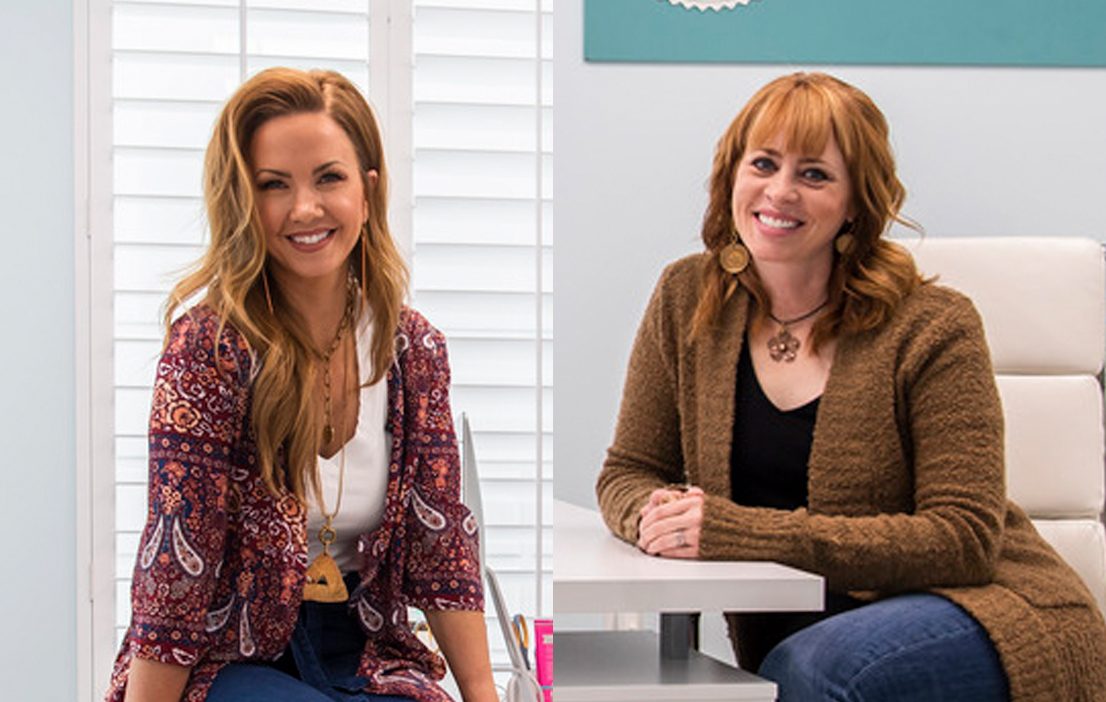
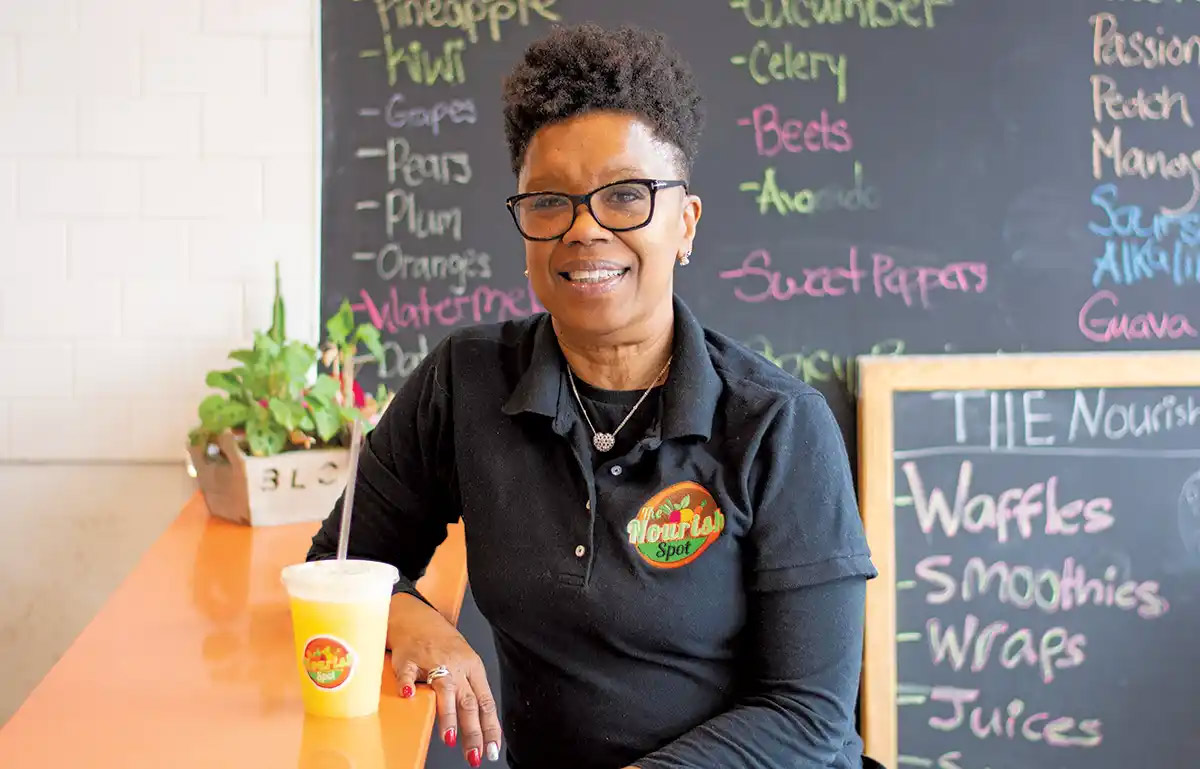
I spent decades working in corporate communications. When my job was eliminated in 2015, I decided to turn that apparent setback into a new beginning. In 2017, my daughter and I opened The Nourish Spot — a quick-service restaurant offering customizable smoothies, salads, wraps, bowls, and juices.
My family has been here in Jamaica, Queens for generations, and I wanted to offer our community nourishing food at reasonable prices. It’s been incredibly rewarding to build the business; there’s been so much enthusiasm and support in the community.
How has The Nourish Spot grown and changed since 2017?
It’s almost entirely different! When we started out, we only had one location. Today, we have a location at JFK International Airport and offer our food at major venues across New York City, including the U.S. Open. We also do a lot of catering for big companies like Goldman Sachs, Mastercard, and Bloomberg.
That’s remarkable! How have you been able to grow your business so quickly?
A big part of it comes from my background in PR and marketing. I’ve learned that you have to consistently promote your business. If people don’t know you exist, they can’t become your customers. So we use a mix of tools — everything from digital ads and social media promotions to neighborhood postcards. We’re constantly looking for new ways to stay visible and bring in new customers.
So what are some of the most effective ways of keeping The Nourish Spot visible?
Platforms like Facebook and Instagram work really well. We only deliver within a 20-mile range, and those two platforms let us focus our ads and marketing within that range; that way, we do n’t waste money connecting with people outside of our delivery area. The platforms also help us promote our product to people who are likely to actually place an order — for example, people who are searching online for healthy food options. They even offer data analytics tools that help us understand which messages people are responding to, what products are getting attention, and what’s actually driving orders.
That helps us use our marketing budget wisely, which is really important for any small business. In our case, it helps us keep our costs down and our prices low, which is critical to our mission of providing nourishing food that’s affordably priced.
New York lawmakers are considering new data privacy rules that could make it harder for small businesses to use digital tools to reach customers. You recently met with New York State Senator Kristen Gonzalez about those proposals. What was your message to lawmakers?
My message was that overly restrictive data rules could make it much harder for small businesses like mine to reach customers, grow, and create jobs. We use data-powered tools in very practical ways. We’re not invading anyone’s privacy. We’re using basic tools to make sure health-conscious members of our community know we’re here. For example, when we’re trying to reach new customers, we use tools that rely on very broad information, like ZIP codes or neighborhoods, or search data that indicates an interest in healthy food.
My concern is that some of these proposals could go too far, and make these tools less effective — forcing us to spend more money to reach fewer likely customers. If that happens, it’ll be much harder for us to connect with customers and compete with big chain restaurants.
I share the goal of protecting consumers’ data, but we have to find the right balance. I urged lawmakers to make sure they’re not cutting off access to the basic data-powered tools that help thousands of New York small business owners reach customers, grow their business, and succeed.
It’s so important for lawmakers to hear from small businesses. If another small business owner was thinking about advocating, but maybe feeling hesitant or nervous, what would you tell them about the power of speaking up?
I would tell them that their voice really matters. If you don’t speak up, policy decisions will be made without you — and those decisions can directly impact your business.
I’ve been involved in advocacy since I got out of college, so I’ve seen firsthand how important it is to be part of the conversation. It’s not about being an expert — it’s about sharing your experience and helping people understand what it’s actually like to run a small business day to day.
You have to speak up and help shape what happens. That’s how you make sure policies work for you, not against you.