250 Years of American Small Business Innovation
As Calvin Coolidge famously said, “the business of America is business.”
For 250 years, American small businesses have offered innovative products and services, created jobs and opportunities, and helped keep America’s communities and economy strong. Today, digital tools empower them to reach more customers, compete more efficiently, and grow faster.
Throughout the 20th century, for instance, only big companies like Coca-Cola or Levi-Strauss could run national ad campaigns; it was far too expensive for small businesses to buy radio or TV time, or place ads in newspapers across the country. Today, however, digital ads help small local businesses connect with interested customers across the country. Similarly, national-scale retail was once the domain of only a few giant companies like Sears-Roebuck. Today, online marketplaces like Amazon and eBay help even the smallest brands sell far beyond their local communities. Moreover, new AI-powered tools are helping even the smallest businesses rapidly scale by making everyday tasks and decision-making far more efficient.
Nationwide, small businesses are leveraging cutting-edge tools and platforms to grow and thrive in today’s digital economy. Here are three great examples:
Using digital ads to connect with new customers
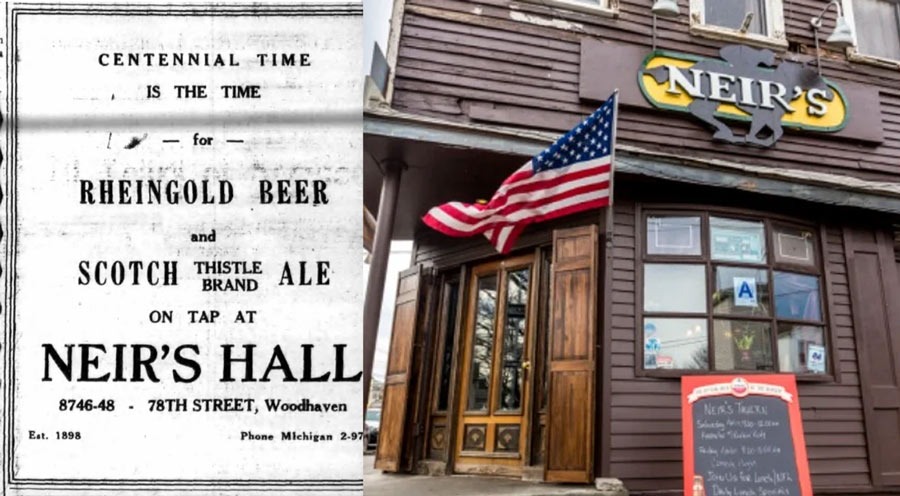
Woodhaven Journal advertisement from 1935
At Neir’s Tavern in Woodhaven, Queens, owner Loycent Gordon has worked hard to keep one of America’s oldest bars thriving. For centuries, tavern owners like Loycent relied on newspaper ads, word-of-mouth recommendations, and the steady patronage of locals. When Loycent purchased Neir’s in 2009, he first turned to community outreach to connect with customers — but found it took a huge amount of his time and energy, and it was hard to tell which efforts paid off.
Today, digital ads help Loycent connect with far more people, far more efficiently. Ad platforms like Google Ads allow him to reach people nearby who are likely to be interested in stopping by — for example, someone searching online for a cozy bar in Woodhaven or who previously visited Neir’s website.
Using ad platforms’ built-in analytics tools, Loycent can also see which messages are resonating most with potential customers, and use that information to make smarter decisions about how to spend his advertising budget.
“Digital ads allow us to connect with people whose online activity shows they’re likely to be interested in visiting us,” Loycent says. “It’s really cost-efficient because we don’t waste money sending ads to people upstate, or who prefer a formal dining experience.”
Leveraging online marketplaces and e-commerce to sell nationwide
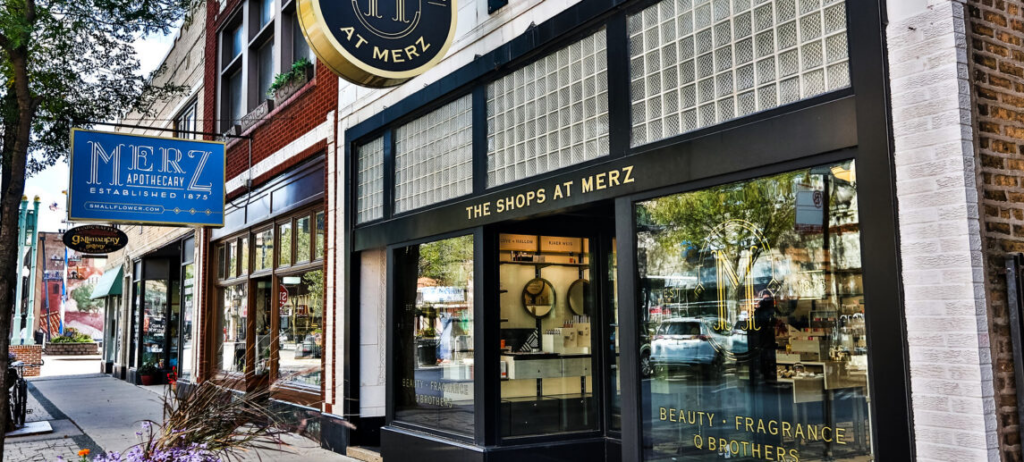
Merz Apothecary has served customers in Chicago’s North Side since 1875, and today offers hard-to-find health, beauty, and personal care products, as well as expert customer service. And thanks to digital tools, the historic pharmacy is also a thriving nationwide business.
Merz launched its website in 1997, making it a pioneer in e-commerce. For the previous century, the pharmacy’s owners relied on word-of-mouth within the largely German- and Swedish-immigrant communities it served. But today’s digital tools allow customers across the country to discover Merz’s carefully curated products through its website, Smallflower.com, and on online marketplaces like Amazon.
Indeed, e-commerce and online marketplaces have allowed Merz to take what made it a beloved local institution — deep product knowledge, unique inventory, and trusted customer service — and build it into a much larger, national business reaching customers well beyond Chicago.
“We have succeeded by evolving to meet the needs of today’s online shoppers,” says Anthony Qaiyum, owner of Merz Apothecary. “We’ve been selling our goods online since 1997, long before most small businesses were doing so.”
Using AI tools to do more
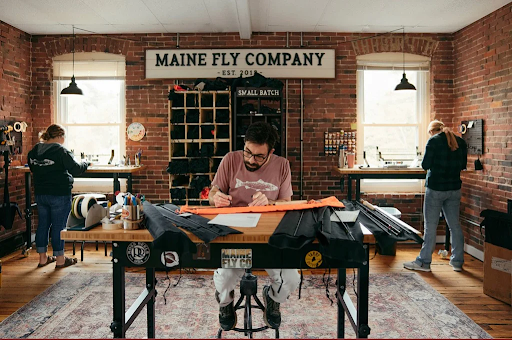
Jeff Davis started Maine Fly Company in 2018 after discovering a passion for building fly-fishing rods by hand. Today, with just six employees, the company has grown into a seven-figure business selling handcrafted rods to customers across the country and around the world.
As the business has grown, Jeff has used AI tools to manage more work and move faster. In the pre-digital era, a company like Jeff’s would have grown slowly, and would likely have served mostly regional fly-fishing enthusiasts. Today, however, AI-powered advertising tools like Google’s Performance Max help Jeff efficiently reach thousands of interested customers. Meanwhile, tools like Gemini help him draft marketing copy, write blog posts, research new markets, brainstorm product ideas, and create onboarding plans for new employees. By saving time on everyday tasks, AI tools give Jeff more capacity to serve customers, develop new products, and keep growing his company.
“Honestly, Gemini has become my assistant,” Jeff says. “As a small business owner, I have dozens of projects happening at once, and Gemini helps me move much faster.”
Looking ahead
As America marks 250 years, small businesses are doing what they have always done: connecting with customers, serving communities, and finding new ways to grow and thrive. The same entrepreneurial spirit continues to drive small businesses today to use digital tools in a connected and competitive online marketplace. To ensure another 250 years of growth and innovation, lawmakers should pass smart bills like the SECURE Data Act that allow small businesses to continue responsibly using data to connect with customers, and avoid bills like AICOA that would break up the integrated digital tools and platforms that help small businesses succeed. With smart policies in place, the sky’s the limit for America’s digitally empowered small businesses.