There’s No Way We’d Be Where We Are Without These Tools.
3C talks to Jeff Davis, founder of Maine Fly Company, about building a Maine-based global brand — and why AI and digital tools are so important to small businesses
Tell us about Maine Fly Company. What does it do, and what inspired you to start it?
I spent years working in corporate environments. Then, about nine years ago — just before my twin boys were born — my father unexpectedly passed away. It forced me to reflect on how he’d lived his life, and what kind of life I wanted to build for myself, my kids, and my family.
My dad loved fly fishing. For him, the best place in the world was on a river in Maine, fishing for salmon. Growing up, it wasn’t something we really shared. But I’d inherited his fishing rods, and in the months following his loss, I started spending time on the water in Maine, and found it so calming and peaceful.
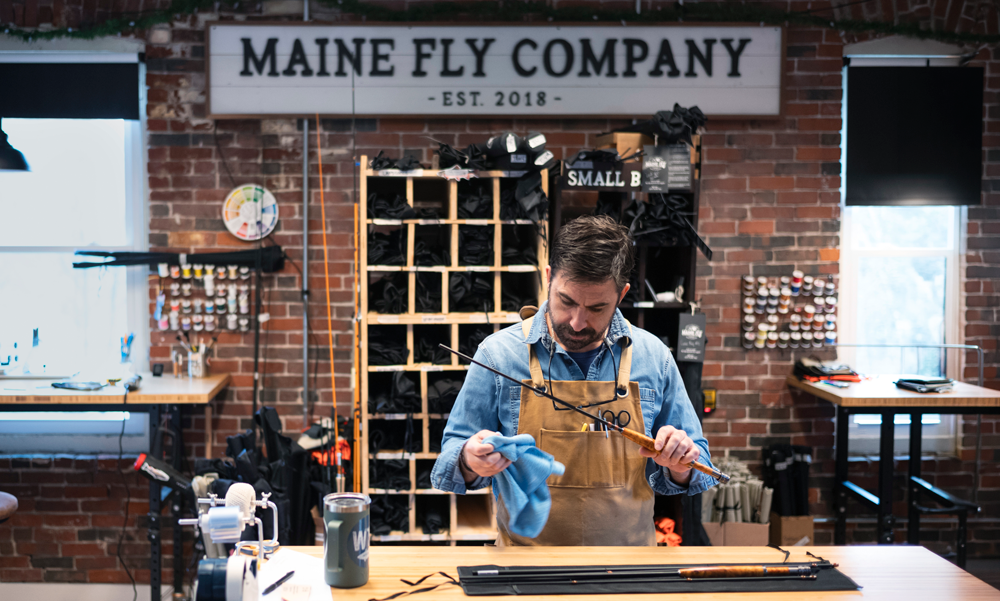
I also became intrigued by the rods’ craftsmanship. It seemed to me that they could be better — more functional, and more aesthetically pleasing. I bought a rod-building kit and an instructional book, and spent about 12 hours building my first rod. I realized I found the same peace building rods that I did standing in the river. So I built another, and another, and another.
I launched Maine Fly Company almost as a hobby brand for friends and family. Because of my business background, I also launched a Shopify site for my rods. To my surprise, orders started pouring in. Within weeks, well-known local companies like Old Town Canoes started reaching out, and the business just kept growing from there.
How has Maine Fly grown since you launched it?
When I started, I was hand-building rods myself while still working as a business consultant. Today, we’re a seven-figure business with a growing team and customers across the country and around the world.
A huge part of that growth has come from digital — and particularly AI — tools. We’ve built the company almost entirely through e-commerce, digital marketing, and storytelling online. We’re trying to build something that feels fresh and modern while staying true to the craftsmanship and values behind the brand.
We’ve also been intentional about staying independent. We only sell our rods through our website and a few carefully chosen retail partners. We want customers to feel connected to the brand, the story, and the people behind it.
What digital tools have been most important to your growth?
Digital advertising has been huge for us, especially Google Performance Max campaigns.
Early on, I thought success was mostly about having incredible videos or perfect creative assets. Over time, I realized it’s really about getting the right content in front of the right people.
Performance Max has been incredible for that. I have campaigns right now generating returns of nearly 2,000%. Using AI, Performance Max delivers our ads to people likely to be interested in our products — for example, people who’ve been looking for or shown interest in fly-fishing gear. That’s helped boost our sales and made them much more consistent and predictable month to month.
We also rely heavily on Shopify and digital analytics tools to better understand customer behavior and help us grow strategically. There’s no way we’d be where we are today without these tools.
Do you use other AI tools in your business?
Honestly, Gemini has become my assistant. As a small business owner, I have dozens of projects happening at once, and Gemini helps me move much faster. I use it for everything from writing marketing copy and blogs to helping with product strategy, onboarding plans, and market research.
For example, I recently needed a two-week onboarding plan for a new employee and was short on time. I uploaded the job description and key responsibilities, and Gemini drafted a strong onboarding structure for me. I spent about 10 minutes making tweaks, and then it was done. It saved me hours.
I’ve also used AI tools to help me think through new ideas and identify opportunities for growth. It’s become an incredibly valuable resource for brainstorming and gut-checking new ideas.
You recently traveled to Washington to speak with lawmakers about AI and digital policy. What message did you want policymakers to hear?
I never imagined myself participating in conversations with lawmakers about technology policy, but I realized how important it is for small businesses to help lawmakers understand how we use AI and digital tools in our day-to-day operations — and how regulations can dramatically affect the tools’ cost and effectiveness.
I think sometimes lawmakers don’t fully realize how important digital tools are to small businesses’ ability to operate and grow. I understand their concerns about data privacy and AI. But regulations need to be carefully balanced so they minimize risk while allowing small business owners like me to leverage the tools we need to grow, compete, and reach customers.
What would you tell other small business leaders who may be considering advocacy work?
I’d encourage other small business leaders to talk to lawmakers. You don’t have to be a technology or policy expert to make a valuable contribution — you just have to be able to explain how these tools show up in your business, where they save time, and how new, flawed rules could create practical challenges.
I found the experience much less intimidating than I expected it would be. At the end of the day, these are conversations with people who want to understand how policy decisions affect businesses in their communities. When small business owners speak up, they help policymakers understand how proposed policies would affect them — so they can avoid making rules that would make it harder for small businesses to grow.